清明踏青 Day 4 · 姥山岛 & 巢湖 — Monday, April 6, 2026
巢湖姥山岛、春晚骏马展板、妈妈和读书铜雕少年、老树根雕和烟雨垂柳、湖边午饭 — Gushan Island on Chaohu, the Spring Gala horse, Mom with the bronze reader, driftwood and misty willows, lakeside lunch
出发去巢湖 / Heading Out to Chaohu
昨天歇了一整天,今天终于有精神带爸妈出门。早上吃过早饭就开车往巢湖方向去。路上爸爸妈妈在后排一边聊天一边看窗外的风景,我一边开车一边庆幸昨天让他们好好休息了一天。
After a full day’s rest, everyone had the energy to head out. Breakfast, then the car pointed toward Chaohu. Mom and Dad chatted in the back seat watching the scenery slide past, and I was quietly glad I’d given them a day off.
关于巢湖 / About Lake Chaohu
巢湖是中国五大淡水湖之一,面积约780平方公里,位于安徽省中部、合肥市境内。它的名字有两种说法:一说因湖边的巢山(居巢山)而得名,一说因为古代此地多鸟巢。巢湖的历史可以追溯到一百多万年前的更新世地质运动——整个湖盆是一个断陷盆地,是华东地区最大的构造湖。近年来巢湖的蓝藻治理是安徽省最重要的环保议题之一。
Lake Chaohu is one of China’s five great freshwater lakes, covering about 780 km² in central Anhui within Hefei’s municipal borders. Its name has two origin stories: one ties it to Mount Chao nearby, the other to the many bird nests (chao) once found along its shore. The lake basin dates back over a million years to Pleistocene tectonic activity — a graben lake, the largest tectonic lake in eastern China. In recent years, blue-green algae remediation in Chaohu has been one of Anhui’s most pressing environmental challenges.
姥山岛 / Gushan Island
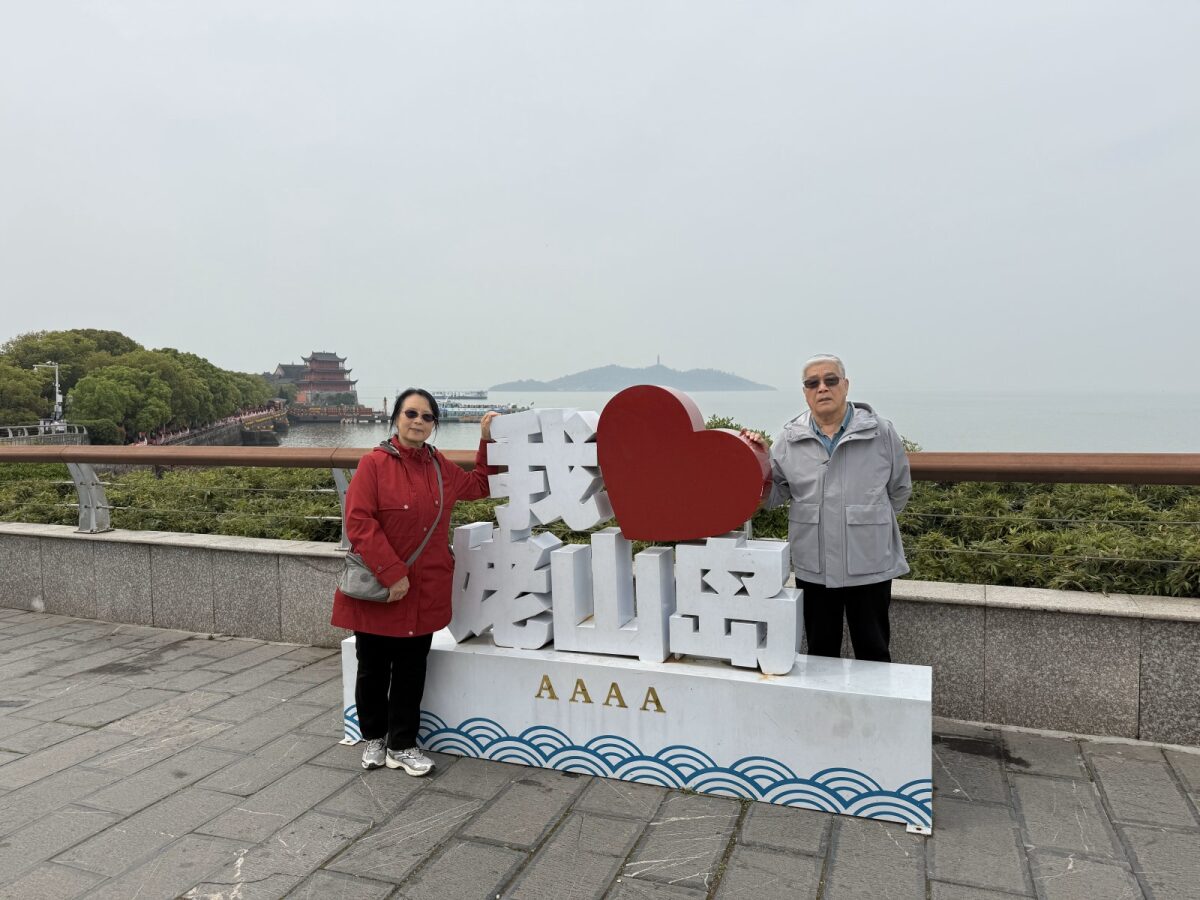
先到姥山岛景区入口——一个大大的**“我 ❤ 姥山岛 AAAA”**石碑立在门口。爸妈站在两边合了影。
At the entrance to the Gushan Island scenic area — the obligatory giant “I ❤ Gushan Island AAAA” landmark sign. Parents took their places on either side.
关于姥山岛 / About Gushan Island
姥山岛是巢湖中唯一的岛屿,面积约0.86平方公里。岛上有一座建于明崇祯四年(1631年)的文峰塔,七层八角,是当时庐州府为了”兴文运”而建的风水塔。据传合肥在建塔之前从未出过状元,建塔之后的清代果然出了李鸿章等一批名人——当然这是附会之说,但足见古人对风水的重视。
Gushan Island is the only island in Lake Chaohu, about 0.86 km² in area. It’s crowned by Wenfeng Pagoda, a seven-storey, octagonal tower built in 1631 (Ming Chongzhen 4th year). It was erected as a fengshui tower to “boost literary fortune” for the Luzhou prefecture. Legend has it that Hefei had never produced a zhuangyuan (top imperial exam scholar) before the tower was built — and afterward, the Qing dynasty brought figures like Li Hongzhang. Correlation rather than causation, of course, but it shows how seriously the ancients took their geomancy.
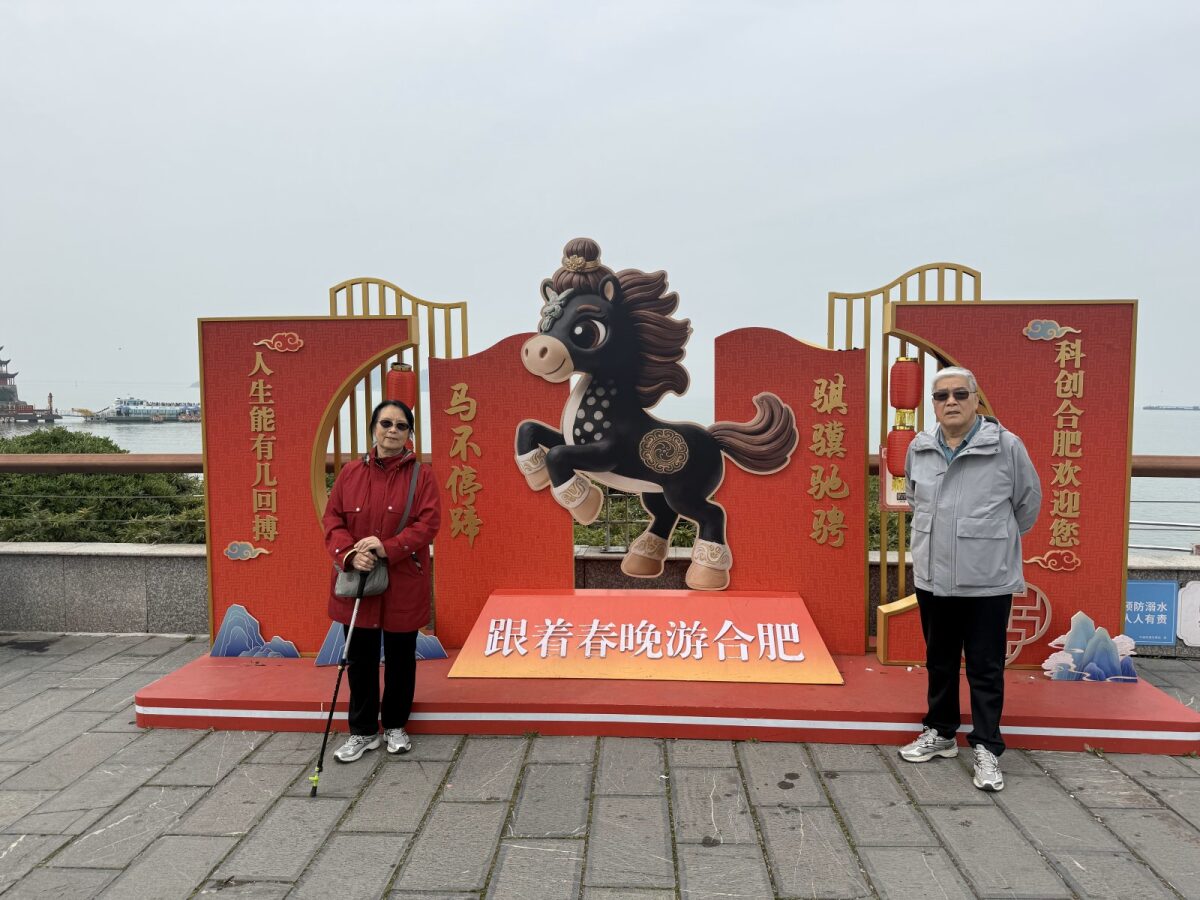
入口广场上摆着一组春晚主题的展板——一匹红色剪纸风格的骏马”马不停蹄”挂在中间,两边写着”人生能有几回搏”和”骁骥驰骋”。是跟着今年央视春晚”游合肥”的宣传活动。
The entrance plaza was hung with Spring Festival Gala–themed displays — a big paper-cut stallion (ma bu ting ti, “galloping without stopping”) in the center, flanked by couplets about striving and galloping into the distance. Part of the “Follow the Spring Gala, Tour Hefei” campaign.
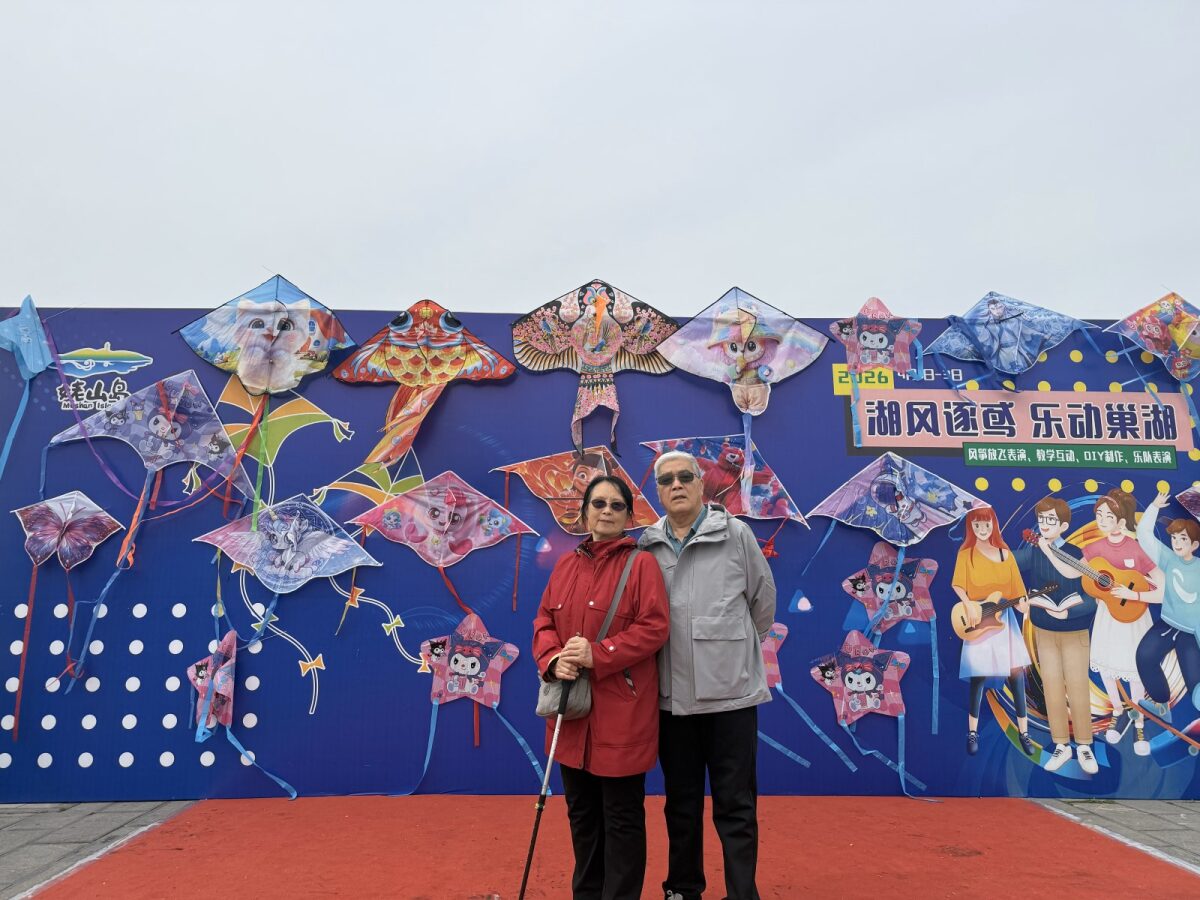
旁边一面巨大的风筝壁画——“湖风逐鸢 乐动巢湖”。
Next to it, a huge kite mural — “Lake wind chases kites, Chaohu comes alive.”
关于风筝 / About Kites
清明放风筝是中国古老的民俗之一。据说最早的风筝是春秋时期鲁班用木头做的”木鸢”,到了唐代改用纸糊竹骨,才有了今天风筝的雏形。清明放风筝有”放晦气”的寓意——把风筝放上天后剪断线,让它飞走,象征把一年的不顺利都带走了。不过现在大多数人放风筝纯粹是为了好玩。
Flying kites at Qingming is an ancient Chinese custom. The earliest kites are attributed to the Spring-and-Autumn-period craftsman Lu Ban, who supposedly built a wooden bird (mu yuan); by the Tang dynasty, paper-and-bamboo construction produced the kite we’d recognize today. Traditionally, releasing a kite at Qingming and then cutting the string was believed to carry away bad luck. These days most people just fly them for fun.
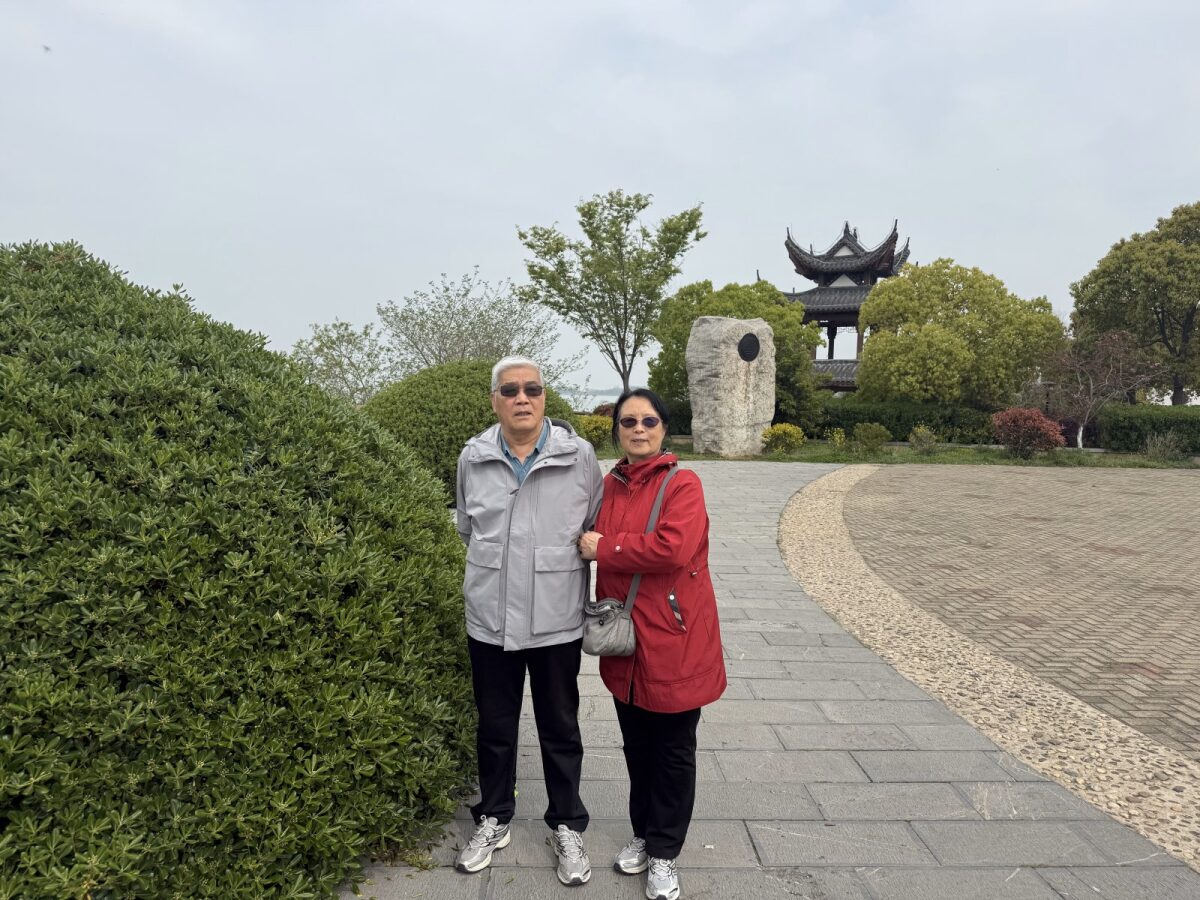
走进去一点,有一个石碑和小亭子的组合,后面是江南园林风格的圆亭。爸妈并肩站在亭子前——典型的景区”到此一游”照,但这种照片多年以后看才知道珍贵。
A little further in: a rock monument next to a small Jiangnan-style pavilion with a curved tile roof. Parents posed in front — the standard tourist “we were here” shot. These are the kind of photos you only appreciate years later.
湖边 / At the Water’s Edge
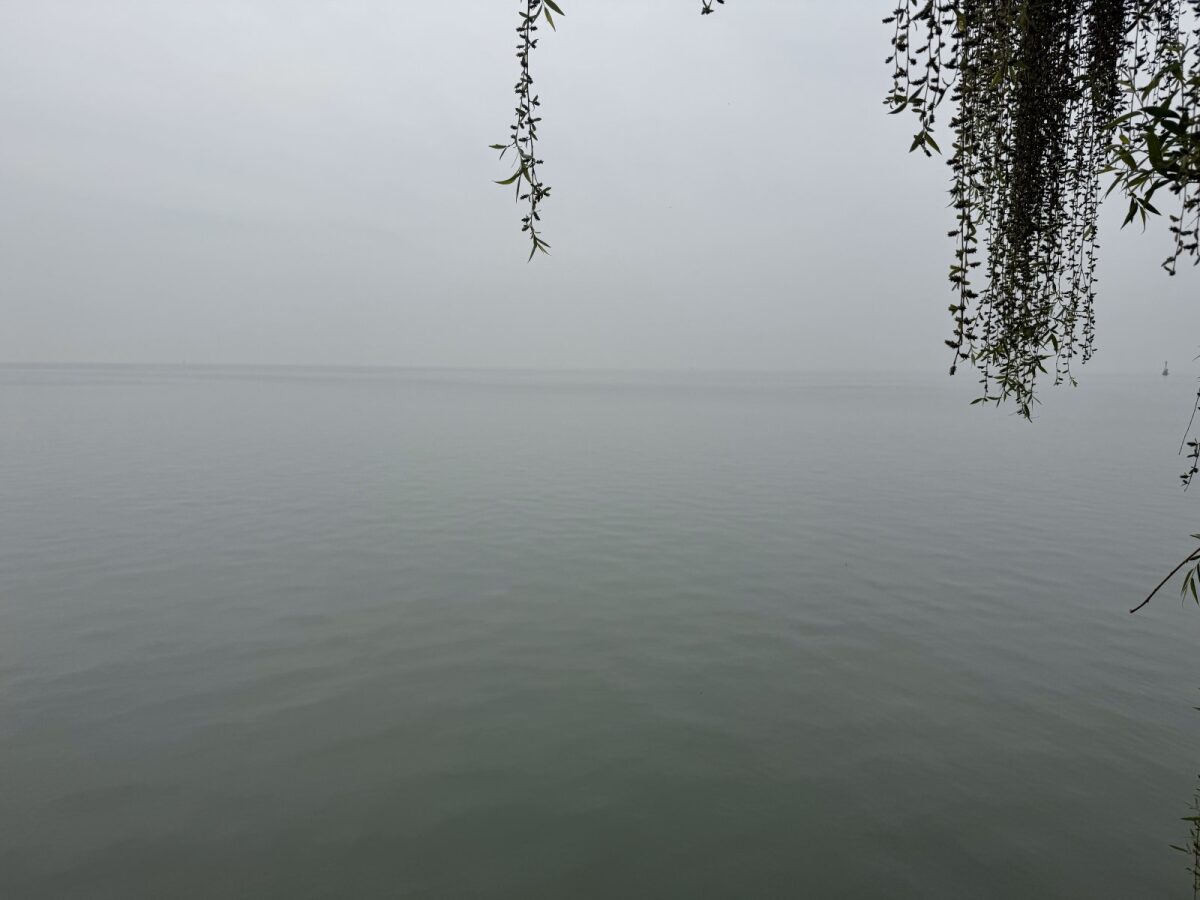
走到湖边。烟雨还没散,柳枝垂到水面上,远处一片灰白色的迷蒙。巢湖的水一向是灰绿色的——不像南方的湖那么清澈,但有一种老家才有的厚重感。
Down at the water’s edge. The morning haze hadn’t lifted; willow branches trailed into the lake; everything beyond was grey-white and indistinct. Chaohu water is always this grey-green — not clear like southern lakes, but with a weight to it that only feels like home.
关于垂柳 / About Weeping Willows
垂柳是中国最古老的栽培树种之一,诗经里就有”昔我往矣,杨柳依依”的名句。在中国文化里,柳树和离别密切相关——古人送别时会折一枝柳条给远行的人,因为”柳”和”留”谐音,寓意”留住你”。清明时节柳树正好发出新芽,在湖边种柳是中国园林的经典做法,既实用(固岸防蚀)又美观。
The weeping willow is one of China’s oldest cultivated trees. The Book of Songs (ca. 1000 BCE) already has the famous line: “When I left, the willows were swaying.” In Chinese culture, willows are deeply tied to farewell — the ancients would break off a willow branch for the departing traveller, since liu (柳, willow) is a homophone of liu (留, to stay). At Qingming, willows are just putting out new shoots. Planting them along lakeshores is a classic Chinese landscaping move — practical (bank stabilization) and beautiful.
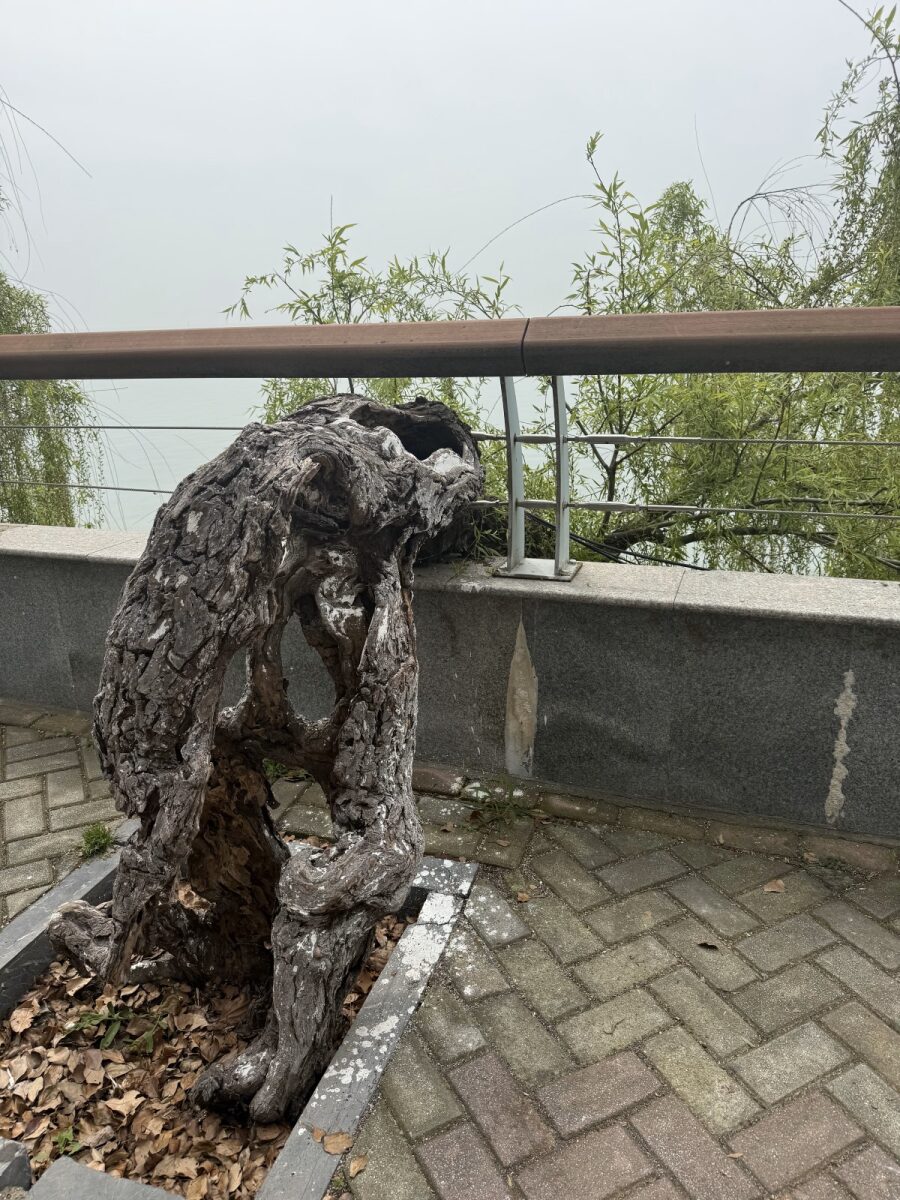
岸边一块老树根做的雕塑——树根本身长得像一只蹲着的野兽,连眼睛都还留着洞。
Along the shore, a piece of driftwood sculpture — the root looked like a crouching animal, eye sockets still hollow in the wood.
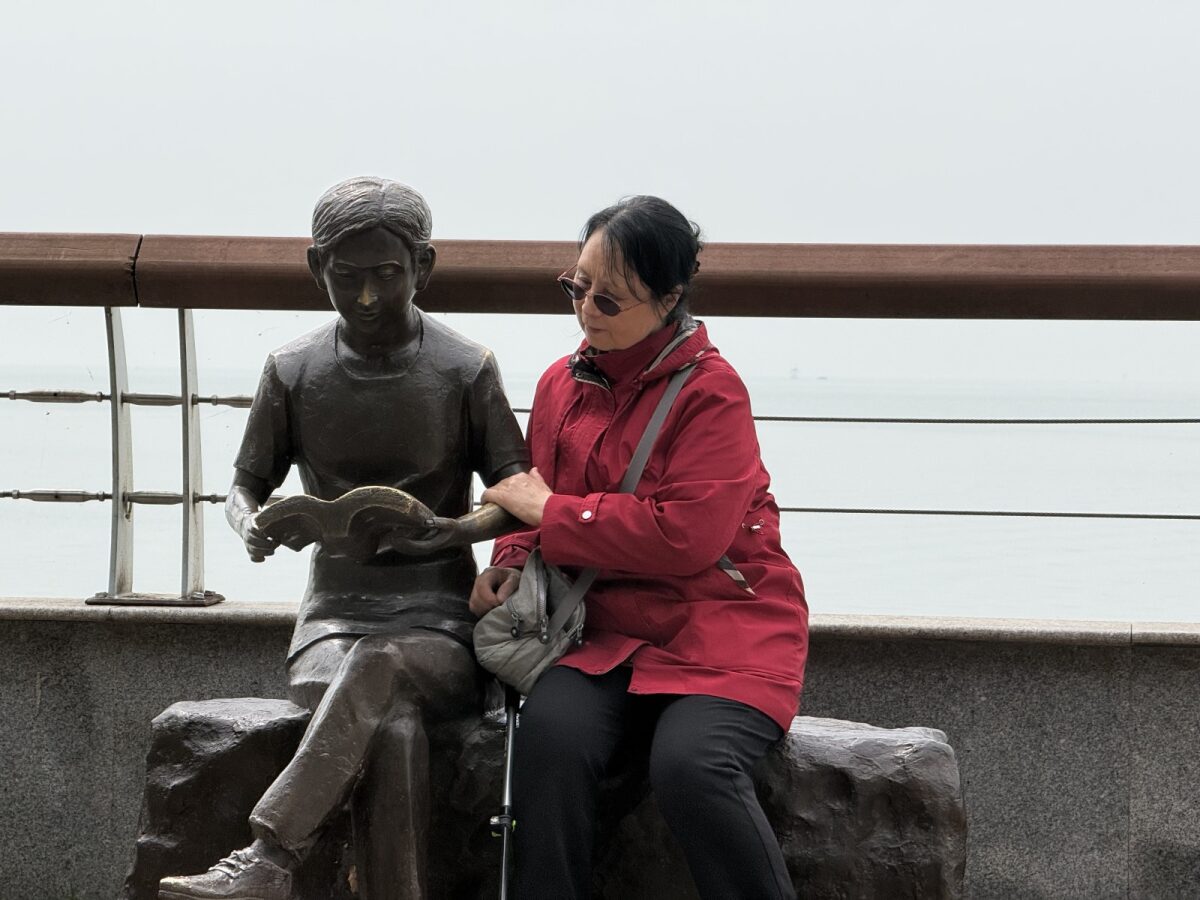
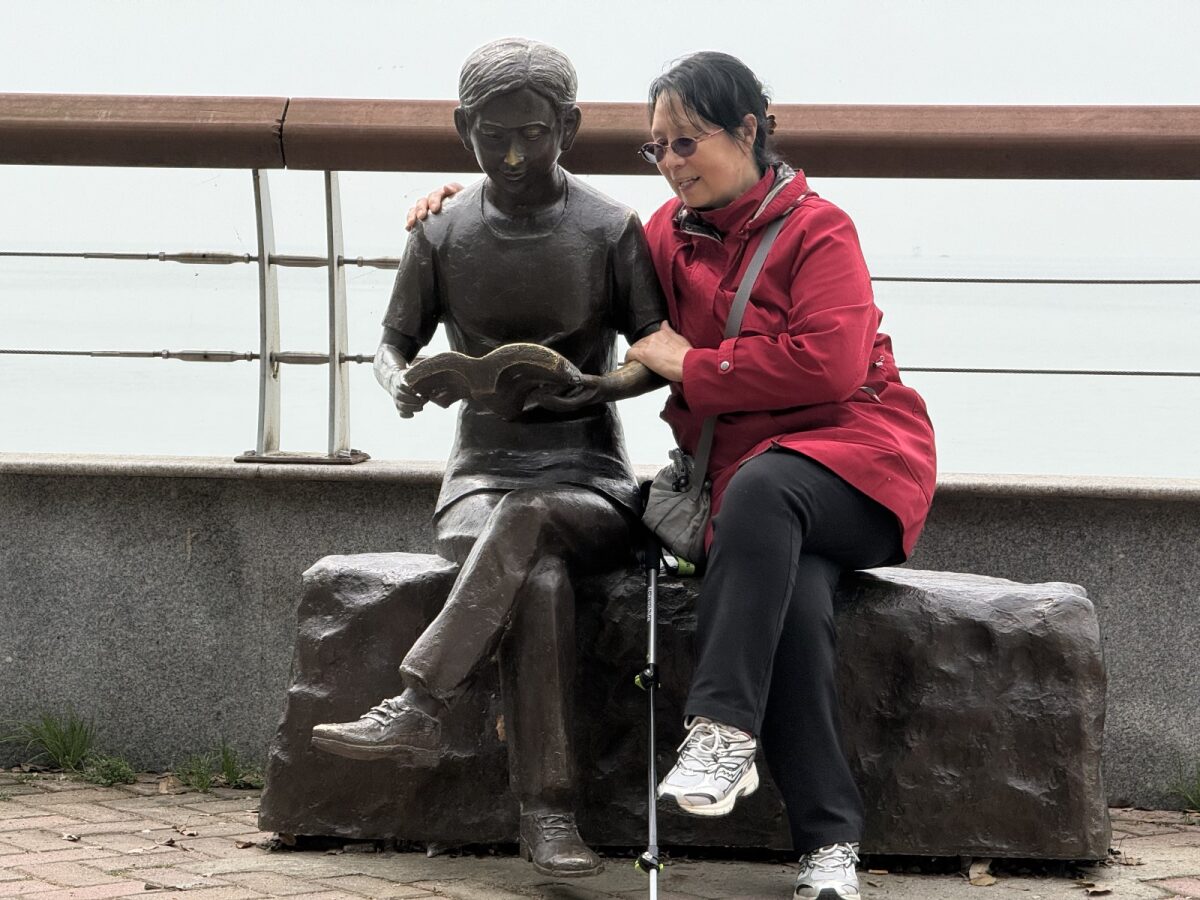
再往前,栏杆边坐着一尊铜雕——一个少年低头看着手里打开的书,就那样一直读着。妈妈坐在他旁边,假装拍他肩膀、假装问他看什么书——她玩得很开心。
Further along, a bronze statue: a boy reading an open book on his lap — just reading, forever. Mom sat down next to him and ran through poses — “pretend to ask what he’s reading,” “pretend to tap his shoulder.” She was having fun.
中午 / Lunch by the Lake
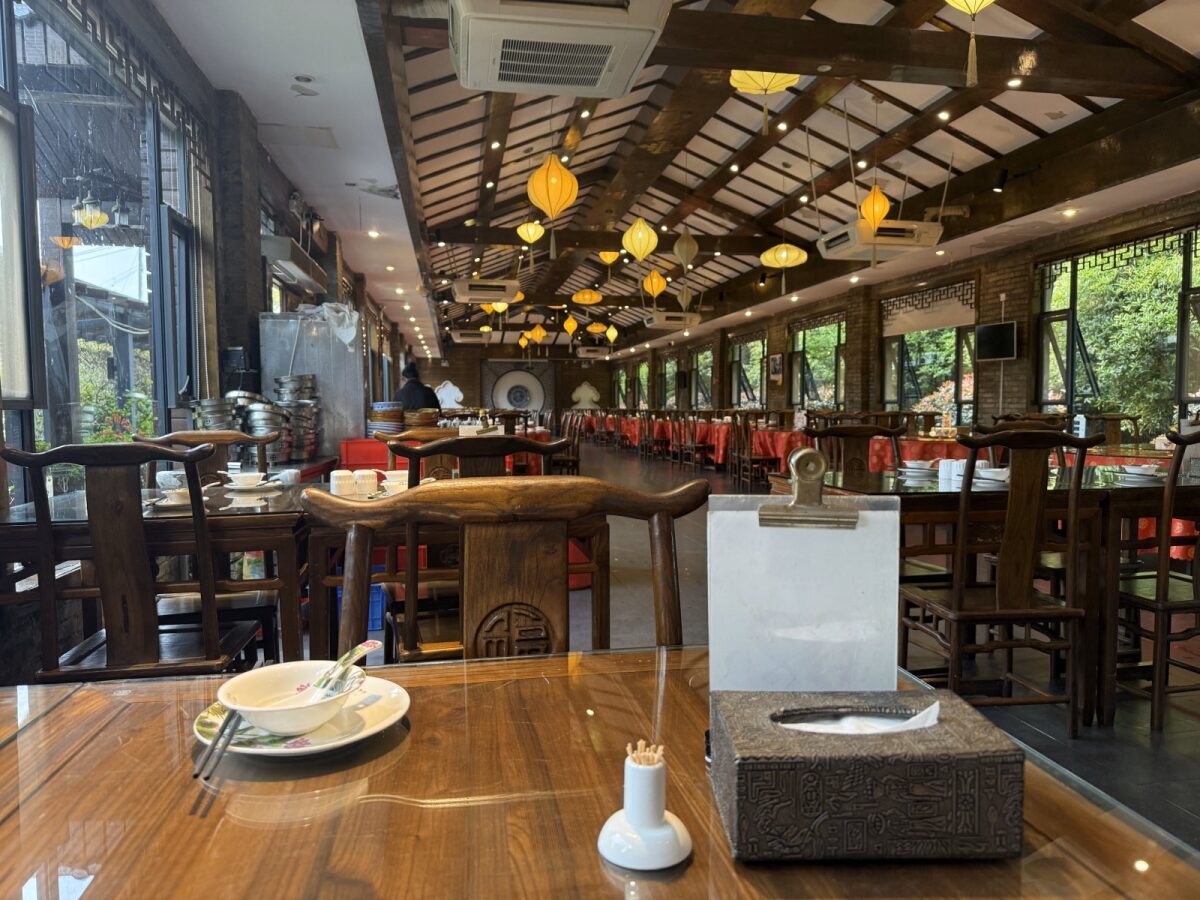
中午在姥山岛附近找了一家靠湖的馆子。木梁挂着纸灯笼,靠窗的桌子坐满了人,空气里是蒸笼和普洱的味道——爸爸很喜欢这种接地气的老式堂食。大家慢慢点了一桌子菜,一边吃一边看窗外的湖色。
At midday we found a lakeside restaurant near Gushan Island. Paper lanterns hung from wooden beams, window tables all taken, the air thick with bamboo-steamer steam and pu’er tea — Dad loves this kind of unfussy old-school dining. We ordered slowly, ate slowly, watched the lake between bites.
收尾 / Wrap-up
天目湖的温泉、溧阳的扎肝和老县志、合肥家里的一壶茶、巢湖的烟雨柳色——算是把今年春天踏青的心愿认认真真地圆了。
The hot spring at Tianmu Lake, Liyang’s zhagan and old gazetteer, a pot of tea at home in Hefei, the misty willows of Chaohu — this year’s spring outing, carefully and properly done.
爸爸的感冒好得很快,妈妈今年的精神比去年好。悦杉在天目湖笑着在奶奶背后比兔耳朵的画面、爸爸在酒店窗前一动不动看湖看了整整半分钟的背影——这些画面都被我好好地收了起来。这个清明,很圆满。
Dad’s cold cleared up fast; Mom seems in better shape than last year. Yueshan making bunny ears behind Grandma at Tianmu Lake, Dad standing perfectly still at that hotel window for a full half-minute — I’ve tucked all of those away safely. A wonderful Qingming.
温泉、天目湖、樱花公园、巢湖、骆岗——平淡的陪伴,最珍贵的春天。
Hot spring, Tianmu Lake, cherry blossoms, Chaohu, Luogang — quiet companionship, the most precious spring of all.
留言 / Comments
Loading comments...