清明踏青 Day 2 · 天目湖 & 溧阳 — Saturday, April 4, 2026
天目湖湖畔散步、溧阳扎肝(真不好吃)、《弘治溧阳县志》、告别溧阳 — Walking the lakeshore, the infamous Liyang zhagan, the Ming-era county gazetteer, and farewell to Liyang
清晨 / Early Morning: 送悦杉和艳辉去机场
今天早上家里分成了两路——艳辉和悦杉要飞沈阳去参加芭蕾舞集体舞比赛,我们早早起床把行李装车,送她们到最近的机场。悦杉穿着昨天那件米色风衣,抱着练功服的袋子,一边走一边和爷爷奶奶挥手告别。看着她上安检的背影,心里有点舍不得,又为她开心——第一次一个人(好吧,是跟着妈妈)去比赛。
Today the family split in two. Yanhui and Yueshan were flying to Shenyang for a ballet group-dance competition, so we were up early loading the car and driving them to the nearest airport. Yueshan wore yesterday’s beige trench coat, clutching her practice-clothes bag, waving to Grandma and Grandpa as she walked. Watching her disappear through security, I felt a small pang — and a lot of pride. Her first competition trip away (well, with Mom, but still).
上午 / Morning: 天目湖湖畔散步
送完机场回到酒店,天比昨天亮了一些,云层薄了,偶尔漏下几缕阳光。剩下我和爸妈三个人,沿着湖岸慢慢往远处走。爸妈走在前面,我走在后面拍他们的背影。脚下是细碎的石子和柳芽,空气里带着水汽和初春的草味。
Back at the resort from the airport run, the sky had brightened — clouds thinner, strips of sunshine breaking through. Just the three of us now — Mom, Dad, and me — walking the lakeshore at our own pace. They went ahead, I trailed behind with the camera, catching their backs. Fine gravel and willow shoots underfoot, the air full of water and new grass.
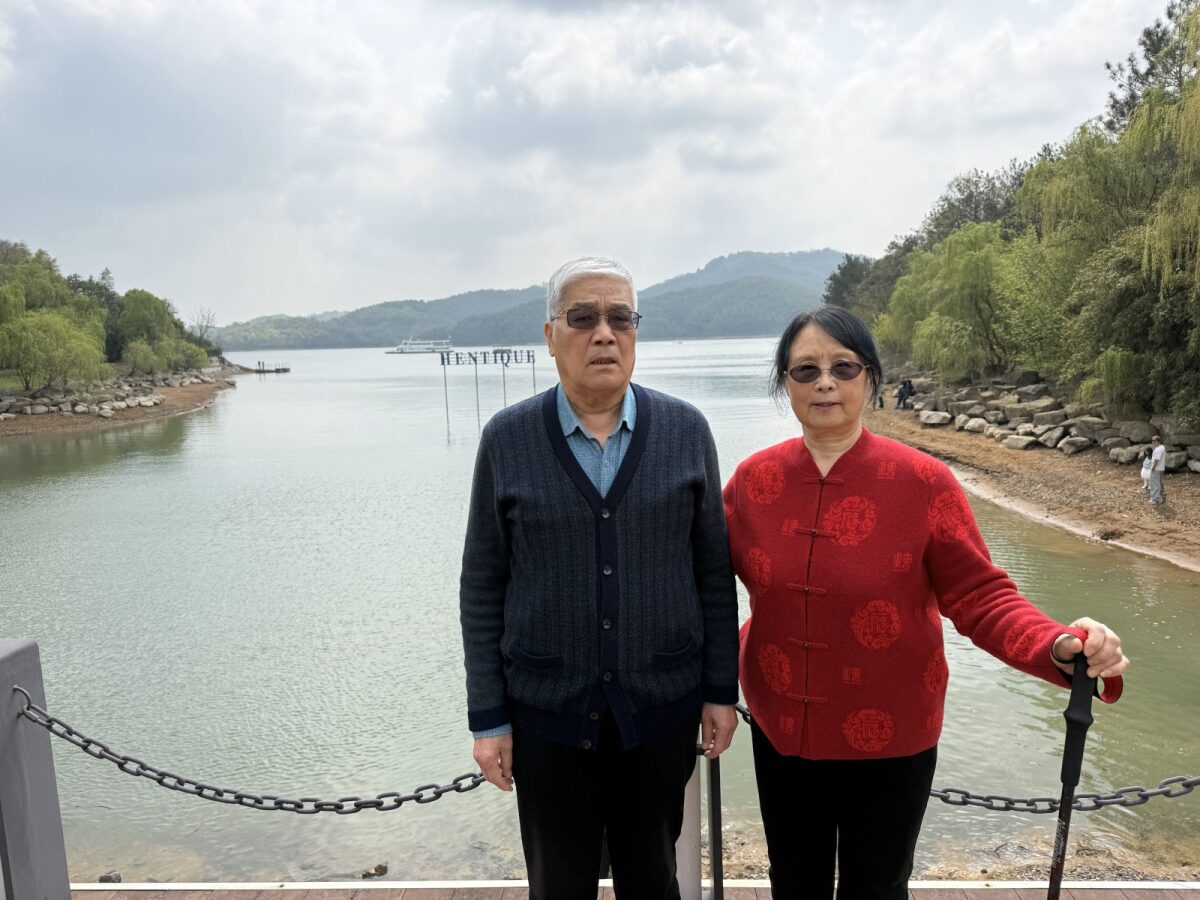
爸爸妈妈站在湖边的栏杆旁合影。他们今天换了行头——爸爸穿着深蓝色开衫,妈妈穿着那件绣着”福”字图案的红色唐装毛衣。天目湖在身后铺开,水面很静。
Parents posed by the chain-fence lookout. They’d changed outfits today — Dad in a dark navy cardigan, Mom in her red mandarin-collar sweater with embroidered fu (福) motifs. Tianmu Lake spread out behind them, the water very still.
关于唐装 / About the Tangzhuang
妈妈穿的这件红色上衣是唐装——但它其实和唐朝没什么关系。现代”唐装”是以清代马褂为基础改良的中式上衣,立领、对襟、布扣,2001年上海APEC峰会上各国领导人集体穿着唐装亮相后在国内大火。这种”喜庆场合穿一件红色唐装”的传统,在老一辈人中间非常普遍。
Mom’s red top is a tangzhuang — though it actually has nothing to do with the Tang dynasty. The modern tangzhuang is an updated take on the Qing-dynasty magua jacket: Mandarin collar, front-opening, cloth knot buttons. It became hugely popular after world leaders wore matching tangzhuang at the 2001 Shanghai APEC summit. Wearing a red one for festive occasions is a deep-rooted habit for the older generation.
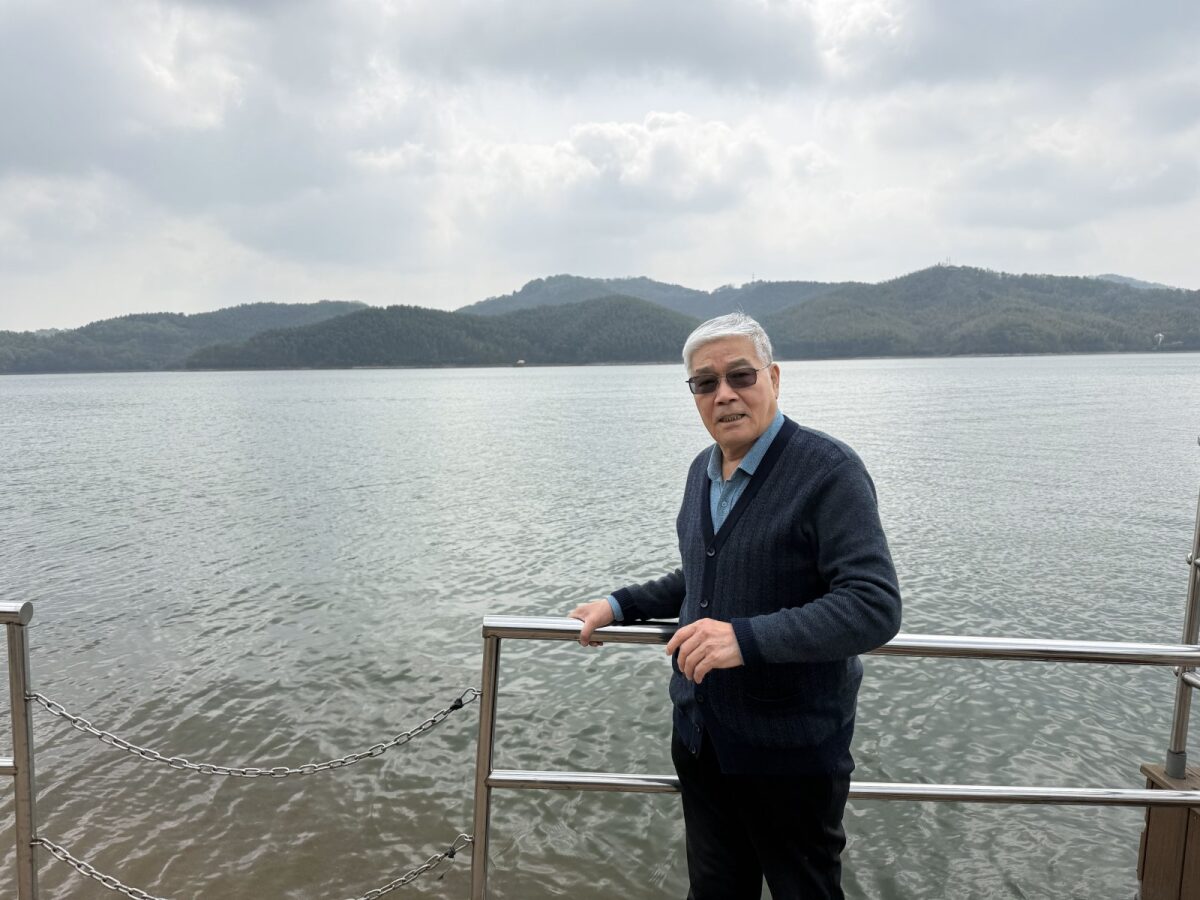
爸爸一个人靠在栏杆上,望着远处的湖面。这种安静的瞬间在他身上不常见——他平时是个闲不住的人。
Dad stood alone at the railing, looking out over the water. These quiet moments are rare for him — he’s not usually a still person.
妈妈穿着红唐装,轻轻靠着栏杆抬头看天,嘴角一直挂着笑——她今天心情特别好。
Mom in her red tangzhuang, leaning on the railing and looking up at the sky, a smile never quite leaving her face. She was in wonderful spirits today.

走到一块大石头边,她坐下来歇脚。风吹着她的头发,身后是整个湖。这张以后一定要打印出来装裱。
She stopped at a big rock to rest. The wind lifted her hair; behind her the whole lake stretched out. This one I’ll definitely print and frame.

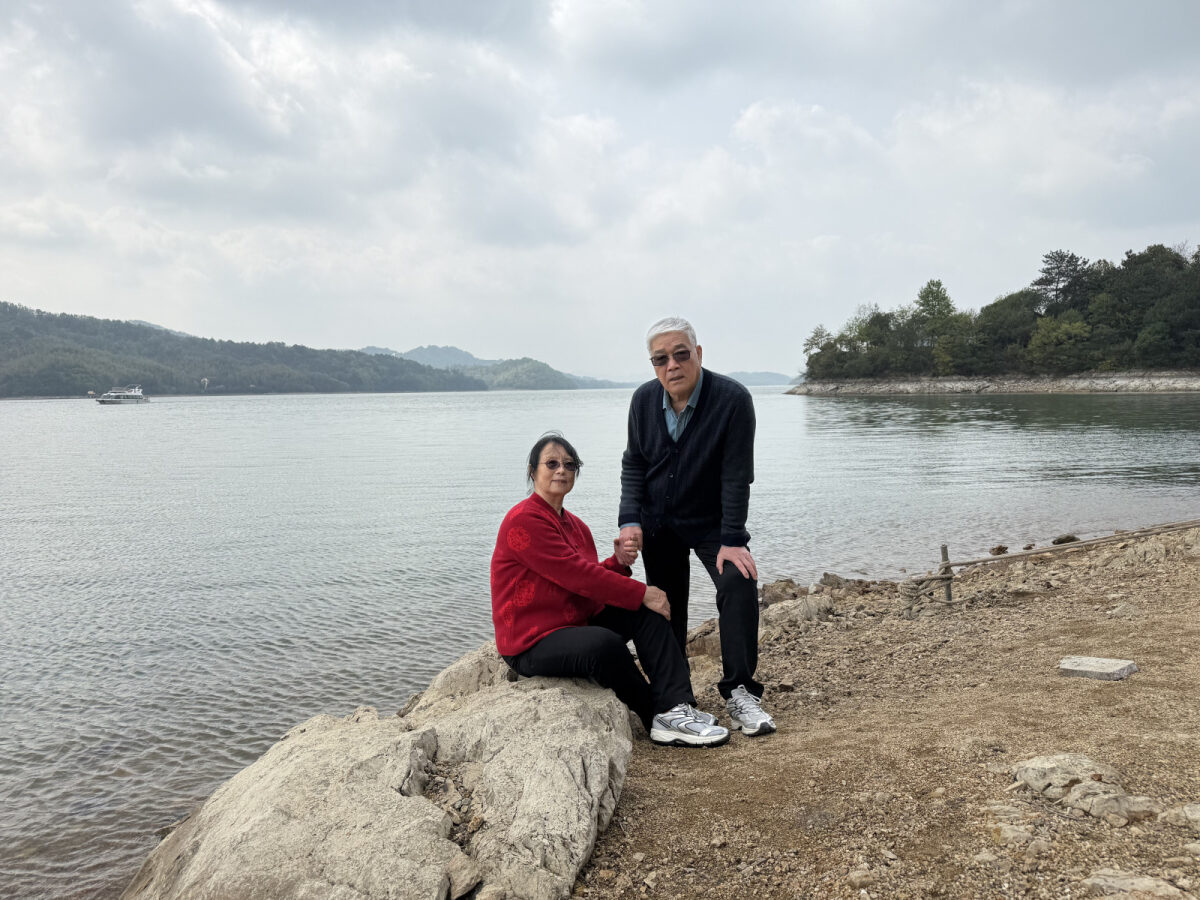
爸爸也走过来了,两个人一起坐在石头上,妈妈在前面,爸爸站在旁边——老夫老妻的默契。
Dad walked over too. The two of them together on the rocks — Mom sitting, Dad standing by her side. The ease of a long marriage.
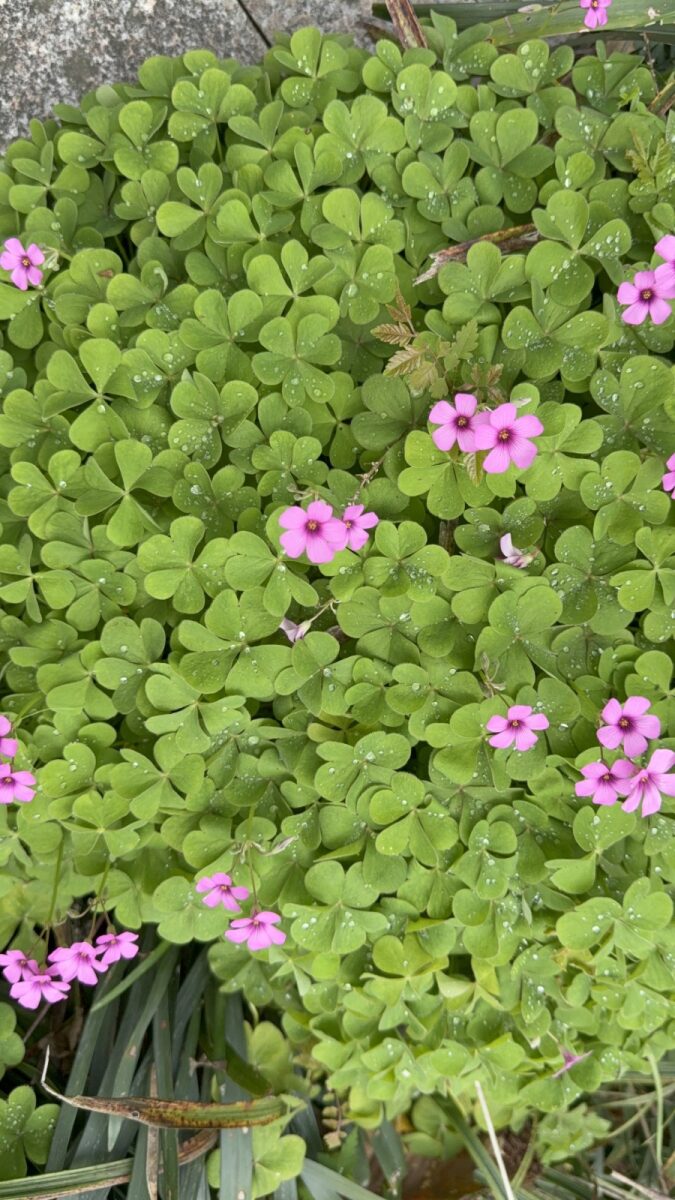
路边有一小片酢浆草开着粉色的花,水珠还挂在叶子上。春天的细节总在低头的地方。
A small patch of pink wood sorrel was blooming by the path, dewdrops still on the leaves. Spring’s details always hide low to the ground.
关于酢浆草 / About Wood Sorrel
酢浆草(Oxalis)是一种世界性分布的小型草本植物,叶子像三叶草但带有明显的心形缺口。它的名字来源于茎叶中含有的草酸——嚼一嚼会有酸味。在中国南方,酢浆草春天在路边、公园、墙角到处都能见到,是一种不起眼但非常顽强的植物。粉色花型的酢浆草品种叫红花酢浆草(Oxalis corymbosa),原产南美,现在在中国已经完全归化。
Wood sorrel (Oxalis) is a cosmopolitan genus of small herbs with clover-like leaves, each leaflet notched into a heart shape. The name reflects the oxalic acid in its stems — chew a leaf and it’s sour. Across southern China it appears every spring in paths, parks, and wall cracks — inconspicuous but very tough. The pink-flowered variety is Oxalis corymbosa, native to South America, now fully naturalized in China.
中午 / Noon: 溧阳扎肝
中午一家人开车进溧阳市区吃饭。专门找了家老店点了本地名菜扎肝——说是”妈妈的味道”,还没上桌就期待得不行。
At midday we drove into downtown Liyang for lunch. Made a point of finding a proper old restaurant and ordering the town’s signature dish, zhagan (扎肝) — everyone calls it “the taste of mom’s cooking.” Expectations were sky-high.
结果……真不怎么好吃。用猪肝、猪小肠、五花肉、笋子捆在一起红烧,几样食材凑在一起,怎么也没有掌中宝或阳江三宝那种一口惊艳的感觉。一家人你看我我看你,都有点哭笑不得。妈妈最实在,夹了一块嚼了嚼说:“下次我给你们做红烧肉吧。”
And… it really wasn’t great. Pork liver, pork intestine, belly and bamboo shoot tied together and braised — the combination just doesn’t sing the way zhangzhongbao or Yangjiang sanbao do. We looked at each other not sure whether to laugh. Mom, ever the practical one, chewed a piece and declared, “Next time I’ll just make you hongshao rou at home.”
关于扎肝 / About Zhagan
扎肝是溧阳传统名菜,用猪小肠把猪肝、五花肉和笋子扎成一小捆,红烧而成。据说起源于旧时农户过年宰猪后不舍得浪费下水,把各种边角料扎在一起慢炖——某种意义上是”穷人菜”变成了”地方名片”。不过口味见仁见智,不是每个外地人都能习惯这种组合。
Zhagan is a traditional Liyang dish: small bundles of pork liver, belly, and bamboo shoot wrapped in pig intestine and braised. It reportedly originated when farm families, unwilling to waste any part of the New Year pig, tied offcuts together for slow-stewing. A “poverty dish” turned regional calling card — though the taste is very much an acquired one, and not every visitor acquires it.
下午 / Afternoon: 溧阳小逛 · 县志
午饭后在溧阳转了转。进了一家旧书店,翻到一本**《弘治溧阳县志》**的影印本——这是现存最早的溧阳县志,明弘治年间(约1489年)刊刻,清光绪年间散佚,后来经有心人多方寻找才得以重现。序里写:“上有天堂,下有苏杭,出了苏杭,美在溧阳。”
Poked around Liyang after lunch. Found a secondhand bookshop with a reprint of 《弘治溧阳县志》, the oldest surviving gazetteer of Liyang county — printed in the Hongzhi era of the Ming dynasty (around 1489), lost in the late Qing, and painstakingly recovered and reprinted later. The preface quotes the old saying: “Above there is heaven; below there are Suzhou and Hangzhou — and beyond them, the beauty belongs to Liyang.”
关于县志 / About County Gazetteers
县志(地方志)是中国独有的一种历史文献传统,从秦汉开始萌芽,到明清发展到高峰。全国留存的古代方志超过八千种,覆盖几乎每个县级行政区。一部好的县志记载山川地理、物产税赋、人物事迹、风俗方言——是比正史更接近普通人生活的历史。《弘治溧阳县志》是溧阳现存最早的县志,弘治是明孝宗年号(1488-1505),距今超过五百年。
County gazetteers (xianzhi) are a uniquely Chinese form of local historiography, germinating in the Qin-Han period and flourishing under the Ming and Qing. Over 8,000 ancient gazetteers survive nationwide, covering nearly every county-level district. A good gazetteer records geography, products, taxation, biographies, customs, and dialect — history far closer to ordinary life than any official dynastic chronicle. The Hongzhi Liyang Xianzhi is the oldest surviving for Liyang; the Hongzhi era spans 1488-1505, making this document over five hundred years old.
傍晚 / Evening: 告别溧阳
一天走下来,大家都有点累了。爸爸妈妈在车上就开始打盹。晚上一家人慢慢开车回合肥,到家已经是半夜了。
By the end of the day everyone was a bit worn out — Mom and Dad were already dozing in the car. That night we drove slowly back to Hefei, arriving home past midnight.
留言 / Comments
Loading comments...