春节广州 Day 2 - Thursday, February 19, 2026
陶陶居早茶 · 南越王博物馆 · 尼罗河的赠予 · 北京路花市 — Dim sum, Nanyue King Museum, Gift of the Nile & Beijing Road
Morning: 早茶时光 / Dim Sum Morning at Taotaoju
陶陶居 · 百年老字号
广州之行的第二天,当然要从”早茶”开始!我们选了大名鼎鼎的陶陶居,这家创立于1880年的老字号,可是广州早茶的活招牌,还拿过米其林必比登推荐(Michelin Bib Gourmand)呢!
Day 2 in Guangzhou had to begin the proper Cantonese way — with morning dim sum! We chose the legendary Taotaoju, a storied restaurant founded in 1880. This living landmark of Cantonese culinary tradition has earned a Michelin Bib Gourmand recommendation.
Did you know? “早茶”字面意思是”早上喝茶”,但在广东,早茶其实是一顿丰盛的早餐,包括各种精致的点心和一壶好茶。广东人说”饮茶”不只是喝茶,更是一种社交方式和生活享受! “Morning tea” (zaochao) literally means “early tea,” but in Guangdong it’s actually a lavish breakfast of exquisite dim sum paired with fine tea. When Cantonese people say “yum cha” (drink tea), they mean a whole social ritual and way of life!
点心盛宴 · The Dim Sum Feast
桌上摆满了经典点心:
- 虾饺皇 — 晶莹剔透的外皮裹着鲜嫩的大虾,一口咬下去,鲜美的汁水在嘴里爆开
- 叉烧包 — 松软的白面包裹着蜜汁叉烧,甜咸交融,是广式点心的灵魂代表
- 鲜虾肠粉 — 如丝绸般滑嫩的米浆皮,包裹着整只鲜虾,淋上特制酱油
- 蛋挞 — 酥脆的外壳配上丝滑的蛋奶馅,每一口都是幸福
- 糯米鸡 — 荷叶裹着糯米、鸡肉、香菇和咸蛋黄,打开荷叶的瞬间香气四溢
Our table was covered with Cantonese classics:
- Har gow (crystal shrimp dumplings) — translucent wrappers encasing plump shrimp, bursting with fresh flavor
- Char siu bao (BBQ pork buns) — fluffy white buns filled with honey-glazed roast pork, the quintessential dim sum item
- Cheung fun (shrimp rice noodle rolls) — silky rice crepes wrapped around whole shrimp, drizzled with special soy sauce
- Dan tat (egg tarts) — flaky pastry shells cradling silky egg custard, pure bliss in every bite
- Lo mai gai (sticky rice in lotus leaf) — glutinous rice with chicken, shiitake mushrooms, and salted egg yolk, releasing an intoxicating aroma when the lotus leaf is unwrapped
Did you know? 虾饺被称为”点心之王”。一个合格的虾饺,外皮要有至少13道褶子,而且薄到能透出里面粉红色的虾仁。这可是广州点心师傅们花几年功夫才能练出的绝活! Har gow is considered the “King of Dim Sum.” A proper shrimp dumpling must have at least 13 pleats in its wrapper, which should be thin enough to reveal the pink shrimp inside. It takes Cantonese dim sum chefs years to master this art!
Midday: 南越王博物馆 / Nanyue King Museum
两千年前的王 · A King from 2,000 Years Ago
吃饱喝足,我们来到了今天的重头戏——南越王博物馆。这里是西汉南越国第二代王赵眜的陵墓所在地,距今已有两千多年(公元前2世纪)。
Well-fed and happy, we headed to the day’s main attraction — the Nanyue King Museum. This is the site of the tomb of Zhao Mo, the second king of the Nanyue Kingdom during the Western Han Dynasty, dating back over 2,000 years to the 2nd century BC.
昭昭在博物馆红砂岩大门前拍了张照。这座庄严的建筑,守护着两千年前的秘密。
Zhaozhao posed for a photo at the museum’s imposing red sandstone entrance — a solemn guardian of secrets from two millennia ago.
玉衣与玉龙 · Jade Suits and Jade Dragons
博物馆的镇馆之宝包括丝缕玉衣——用丝线穿缀数千片玉片制成的殓服。在中国古代,人们相信玉能保护灵魂,防止身体腐朽。不同等级的人使用不同材质穿缀:皇帝用金缕,诸侯王用银缕或铜缕,而南越王赵眜用的是丝缕——这在全国都极为罕见!
The museum’s crown jewels include the silk-thread jade burial suit — a funeral garment made of thousands of jade pieces threaded together with silk. In ancient China, people believed jade could protect the soul and preserve the body. Different ranks used different threading materials: gold thread for emperors, silver or bronze for princes. Zhao Mo’s silk-threaded suit is exceptionally rare nationwide!
还有精美的玉龙饰,雕工精细得让人叹为观止。两千年前的工匠,用最简单的工具,创造出了如此精美的艺术品。
The exquisite jade dragon ornament features carving so fine it takes your breath away. Artisans from two thousand years ago created such masterpieces with only the simplest of tools.
Did you know? 金缕玉衣是中国古代最高规格的丧葬礼服。一件完整的金缕玉衣需要2000多片玉片和大约1公斤的金丝!制作一件大约需要十年时间。 The gold-thread jade burial suit was the highest-grade funeral garment in ancient China. A complete suit required over 2,000 jade pieces and about 1 kilogram of gold thread! It took approximately ten years to make one.
The Star Exhibit: 尼罗河的赠予 / Gift of the Nile
当两大文明相遇 · When Two Great Civilizations Meet
南越王博物馆正在举办一个特别展览——“尼罗河的赠予”(Gift of the Nile),展出来自古埃及的珍贵文物。这个展览最精彩的地方,是把中国文明和埃及文明放在一起对比,让我们看到:在地球的两端,两个伟大的文明几乎在同一时间思考着同样的问题。
The museum was hosting a spectacular special exhibition — “Gift of the Nile” — showcasing precious artifacts from ancient Egypt. The most brilliant aspect of this exhibit was its parallel comparison of Chinese and Egyptian civilizations, revealing how two great civilizations on opposite ends of the earth were asking the same profound questions at nearly the same time.
平行文明时间线 · Parallel Civilization Timeline
展览用一条巨大的时间线,把中国和埃及的历史并排展示:
The exhibit featured a massive parallel timeline showing Chinese and Egyptian history side by side:
| 时间 / Period | 中国 / China | 埃及 / Egypt |
|---|---|---|
| ~3000 BC | 龙山文化 Longshan Culture | 古王国 Old Kingdom, 金字塔 Pyramids |
| ~2000 BC | 夏朝 Xia Dynasty | 中王国 Middle Kingdom |
| ~1500 BC | 商朝青铜器 Shang bronzes | 新王国 New Kingdom, 图坦卡蒙 Tutankhamun |
| ~200 BC | 秦汉统一 Qin-Han unification | 托勒密王朝 Ptolemaic period |
两个文明都在黄河和尼罗河畔诞生,都创造了文字,都建造了宏伟的建筑,都发展了复杂的宗教体系。而最让人深思的是,两个文明都在追问同一个终极问题:
Both civilizations were born along great rivers — the Yellow River and the Nile. Both invented writing, built monumental architecture, and developed complex religious systems. And most thought-provokingly, both were asking the same ultimate question:
“死后,灵魂去哪里?” “After death, where does the soul go?”
中国人的答案是玉衣、陪葬品和祖先崇拜。埃及人的答案是木乃伊、金字塔和亡灵书。不同的方法,同样的渴望——永生。
The Chinese answer: jade burial suits, grave goods, and ancestor worship. The Egyptian answer: mummification, pyramids, and the Book of the Dead. Different methods, the same yearning — immortality.
荷鲁斯之眼 · The Eye of Horus
展柜里有一枚精致的金质荷鲁斯之眼护符,闪闪发光。荷鲁斯是古埃及的天空之神,他的眼睛象征着保护、皇权和健康。这个符号在古埃及无处不在——刻在神庙墙壁上、制成护身符戴在身上、画在棺木上保护亡者。
In the display case, a exquisite golden Eye of Horus amulet gleamed under the lights. Horus was the ancient Egyptian god of the sky, and his eye symbolized protection, royal power, and good health. This symbol was omnipresent in ancient Egypt — carved on temple walls, worn as protective amulets, and painted on coffins to guard the dead.
Did you know? 荷鲁斯之眼的各个部分分别代表不同的分数(1/2, 1/4, 1/8…),加起来是63/64。古埃及人认为缺失的1/64是由智慧之神透特用魔法补全的。所以荷鲁斯之眼不仅是保护符,还是一个数学符号! Each part of the Eye of Horus represents a different fraction (1/2, 1/4, 1/8…), totaling 63/64. The ancient Egyptians believed the missing 1/64 was filled in by Thoth, the god of wisdom, using magic. So the Eye of Horus is not just a protective symbol — it’s also a mathematical one!
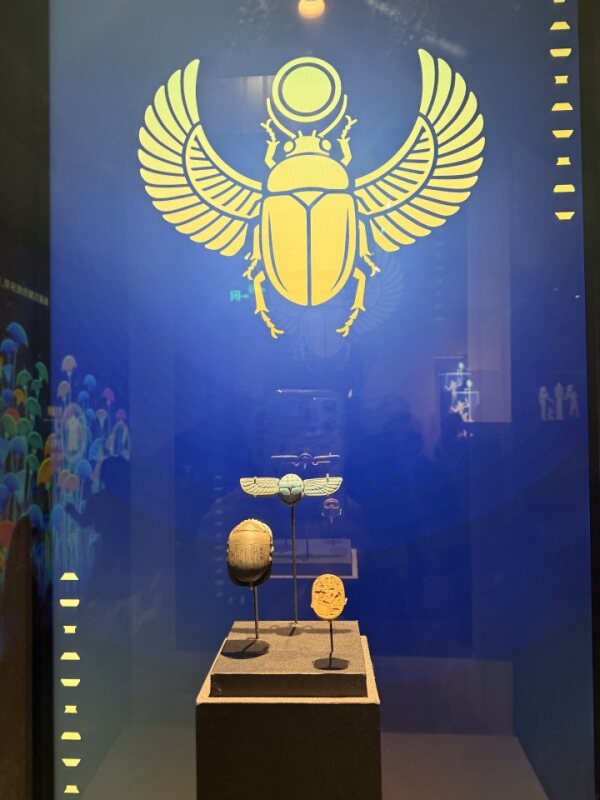
圣甲虫 · The Sacred Scarab
好几枚圣甲虫护符陈列在展柜中。在古埃及,屎壳郎(对,就是推粪球的那种甲虫!)被视为神圣的象征。为什么呢?因为古埃及人看到屎壳郎推动圆球,联想到太阳神凯普里每天推动太阳横过天空。于是,小小的屎壳郎变成了重生和创造的伟大象征。
Several sacred scarab beetle amulets were displayed in the cases. In ancient Egypt, the dung beetle (yes, the one that rolls balls of dung!) was considered a sacred symbol. Why? Because the Egyptians watched the scarab rolling its round ball and saw a reflection of the sun god Khepri rolling the sun across the sky each day. And so the humble dung beetle became a grand symbol of rebirth and creation.
Did you know? 古埃及人在制作木乃伊时,会把心脏留在体内,但用一枚圣甲虫护符放在心脏上方。他们相信在最终审判时,心脏会被放在天平上称量——如果心脏比真理女神玛阿特的羽毛轻,灵魂就能进入永生的乐园! When making mummies, ancient Egyptians left the heart inside the body but placed a scarab amulet over it. They believed that at the final judgment, the heart would be weighed on a scale — if it was lighter than the feather of Ma’at, goddess of truth, the soul could enter the eternal paradise!
安卡 · The Ankh — Key of Life
展览中还有带着**安卡(Ankh)**符号的文物。安卡看起来像一个顶端有圆环的十字架,是古埃及最重要的符号之一,代表”生命”。几乎每一位埃及神灵的手中都握着安卡——它就像一把打开永生之门的钥匙。
The exhibit also featured artifacts bearing the Ankh symbol. The Ankh looks like a cross with a loop at the top and is one of ancient Egypt’s most important symbols, representing “life.” Nearly every Egyptian deity is depicted holding an Ankh — it is like a key that unlocks the door to eternal life.
猫木乃伊 · The Cat Mummy
最让昭昭着迷的展品,是一具猫木乃伊!裹着精细亚麻布的小猫身体,静静地躺在展柜里,已经安睡了三千多年。
The exhibit that fascinated Zhaozhao the most was a cat mummy! The small feline body, wrapped in fine linen, lay quietly in its case, sleeping peacefully for over three thousand years.
Did you know? 古埃及人非常崇拜猫,因为猫能捉老鼠、保护粮仓。猫女神巴斯特(Bastet)是家庭和保护的守护神。在古埃及,故意伤害一只猫是要被判死刑的!心爱的猫去世后,主人会剃掉自己的眉毛来表示哀悼,并把猫做成木乃伊,希望它们在来世也能陪伴自己。 Ancient Egyptians revered cats because they caught mice and protected grain stores. The cat goddess Bastet was the guardian of home and protection. In ancient Egypt, deliberately harming a cat was punishable by death! When a beloved cat died, its owner would shave off their eyebrows in mourning and have the cat mummified, hoping for feline companionship in the afterlife too.
蛙形护符与长方形木棺 · Frog Amulets and a 3,500-Year-Old Coffin
展览还有精巧的蛙形护符——青蛙在古埃及象征着生育和重生,因为尼罗河泛滥退去后,大量青蛙出现在肥沃的泥土中,仿佛是大地重新焕发生机的信号。
The exhibit also included delicate frog-shaped amulets — frogs symbolized fertility and rebirth in ancient Egypt, because after the Nile’s annual flood receded, countless frogs appeared in the fertile mud, as if signaling the earth’s renewal.
最震撼的大型展品是一具长方形彩绘木棺,来自贝尼哈桑(Beni Hassan),属于新王国第18王朝,距今约3500年。木棺内外都绘满了精美的图案和象形文字,色彩历经千年依然鲜艳。这口棺木曾经保护着一个古埃及人的身体和灵魂,陪伴他穿越冥界,走向来生。
The most awe-inspiring large artifact was a painted rectangular wooden coffin from Beni Hassan, dating to the 18th Dynasty of the New Kingdom — approximately 3,500 years old. Both inside and out, the coffin was covered with exquisite paintings and hieroglyphics, their colors still vivid after millennia. This coffin once protected an ancient Egyptian’s body and soul, accompanying them through the underworld and into the afterlife.
Did you know? 古埃及的第18王朝(约公元前1550-1292年)是埃及最辉煌的时期之一,出了很多著名的法老,包括女法老哈特谢普苏特、“异端法老”阿肯那顿,以及最出名的少年法老图坦卡蒙。这口棺木就来自这个黄金时代! The 18th Dynasty (c. 1550-1292 BC) was one of Egypt’s most glorious periods, producing many famous pharaohs including the female pharaoh Hatshepsut, the “heretic pharaoh” Akhenaten, and the most famous boy-king Tutankhamun. This coffin comes from that golden age!
Afternoon: 北京路步行街 / Beijing Road Pedestrian Street
千年古道 · A Thousand-Year-Old Road
从博物馆出来,我们来到了北京路步行街。这条路可不简单——地面下发掘出了千年古道遗址,透过玻璃地板,可以看到从唐朝到民国,不同朝代层层叠叠的路面遗迹。脚下是二十一世纪的步行街,玻璃下面却是一千多年前古人走过的路,这种时空交错的感觉太奇妙了!
From the museum, we headed to Beijing Road Pedestrian Street. This is no ordinary shopping street — beneath the surface lies an archaeological site of ancient road layers. Through glass panels in the ground, you can see road surfaces stacked from the Tang Dynasty through the Republic era. You’re walking on a 21st-century pedestrian mall, while beneath the glass lies the very road ancient people walked over a thousand years ago — a mesmerizing overlap of time!
Did you know? 北京路的古道遗址发现了从唐代(公元7世纪)到民国时期(20世纪初)共11层路面,像一部”地下的历史教科书”,记录了广州一千多年的城市变迁。 The Beijing Road archaeological site reveals 11 layers of road surfaces spanning from the Tang Dynasty (7th century) to the Republic era (early 20th century) — like an underground history textbook recording over a thousand years of Guangzhou’s urban evolution.
春节花市 · Spring Festival Flower Market
正值春节,北京路上搭起了热闹的花市!巨大的花王——一棵盛开的玉兰花树——在灯光下格外耀眼。在广东,春节逛花市是最重要的传统之一。人们相信,把鲜花带回家,新的一年就会花开富贵、好运连连。
It was Spring Festival, and Beijing Road had transformed into a lively flower market! The magnificent Flower King — a magnificent magnolia tree in full bloom — was dazzling under the lights. In Guangdong, visiting the flower market during Spring Festival is one of the most cherished traditions. People believe that bringing flowers home ensures a new year of prosperity and good fortune.
到处是彩灯和春节装饰,热闹非凡。爸爸和昭昭在人群中挤出来,开心地自拍了一张——背景里还有喜茶(HEYTEA)的招牌,很有广州新年的感觉!
Festive lights and Spring Festival decorations were everywhere, bustling with energy. Dad and Zhaozhao squeezed through the crowds for a happy selfie — with a HEYTEA sign in the background, perfectly capturing the Guangzhou New Year vibe!
Did you know? 广东花市的传统可以追溯到明朝(600多年前)。不同的花有不同的寓意:桃花代表爱情和好运,金桔代表”大吉大利”(金桔的”桔”和”吉”谐音),水仙代表好运即将到来。 The Cantonese flower market tradition dates back to the Ming Dynasty (over 600 years ago). Different flowers carry different meanings: peach blossoms symbolize love and good luck, kumquats represent “great fortune” (kumquat “ju” sounds like “ji,” meaning luck), and narcissus flowers herald incoming good fortune.
Evening: 蘩花餐馆 / Dinner at Fanhua Restaurant
一天的行程在蘩花餐馆画上了句号。这家餐厅装修精致华丽,走进去就像穿越到了老广州的大户人家。妈妈在精美的楼梯前拍了张照,端庄又好看。
The day concluded at Fanhua Restaurant. This beautifully decorated restaurant feels like stepping into the home of a wealthy old Guangzhou family. Mom posed for a photo on the ornate staircase — elegant and lovely.
经过一天的文明穿越——从两千年前的南越国到三千五百年前的古埃及,从千年古道到热闹花市——我们带着满满的收获和幸福感,回到了酒店。
After a day of civilization-hopping — from the 2,000-year-old Nanyue Kingdom to 3,500-year-old ancient Egypt, from a thousand-year-old road to a festive flower market — we returned to our hotel full of wonder and happiness.
第二天结束了。今天我们穿越了时空,见到了两千年前的玉衣、三千五百年前的木棺、三千多年前的猫木乃伊,还走过了一千多年前的古道。历史不只在书本里——它就在我们脚下,就在我们眼前。
Day 2 is done. Today we traveled through time itself — encountering a 2,000-year-old jade burial suit, a 3,500-year-old coffin, a 3,000-year-old cat mummy, and walking on a 1,000-year-old road. History isn’t just in books — it’s beneath our feet and right before our eyes.
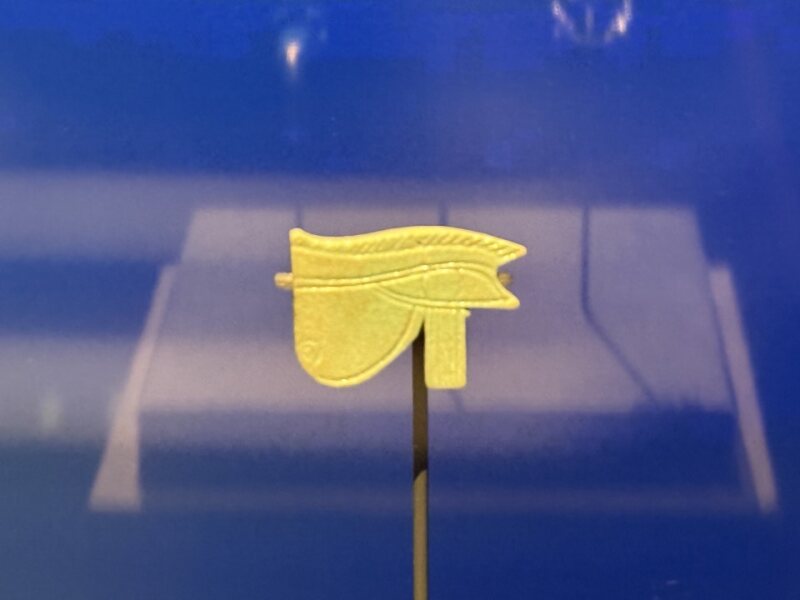 荷鲁斯之眼金护符 Golden Eye of Horus amulet close-up
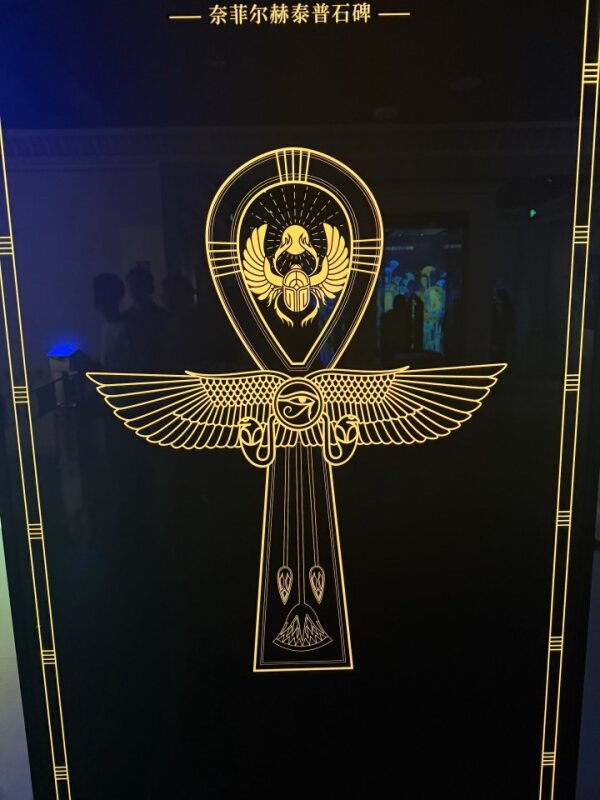 安卡生命十字与荷鲁斯眼 Ankh life cross with scarab and Eye of Horus motif
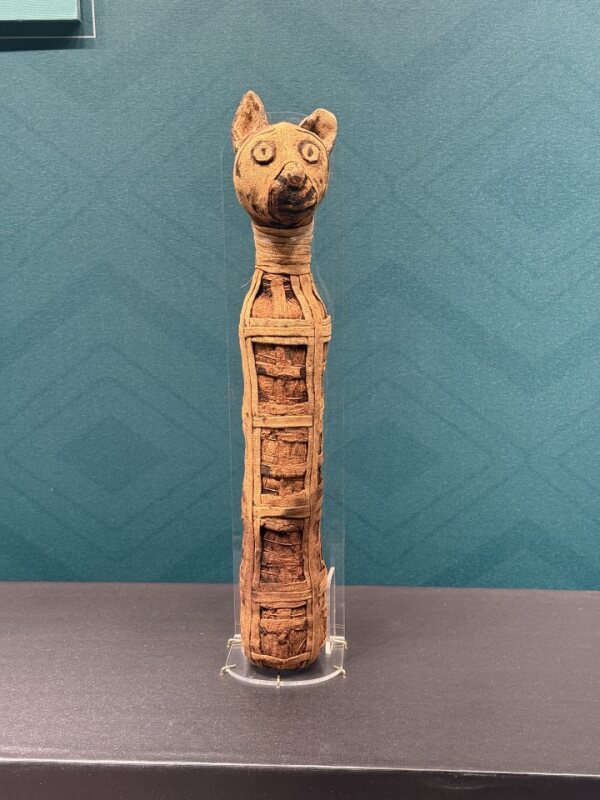 猫木乃伊 Ancient Egyptian cat mummy with linen wrapping
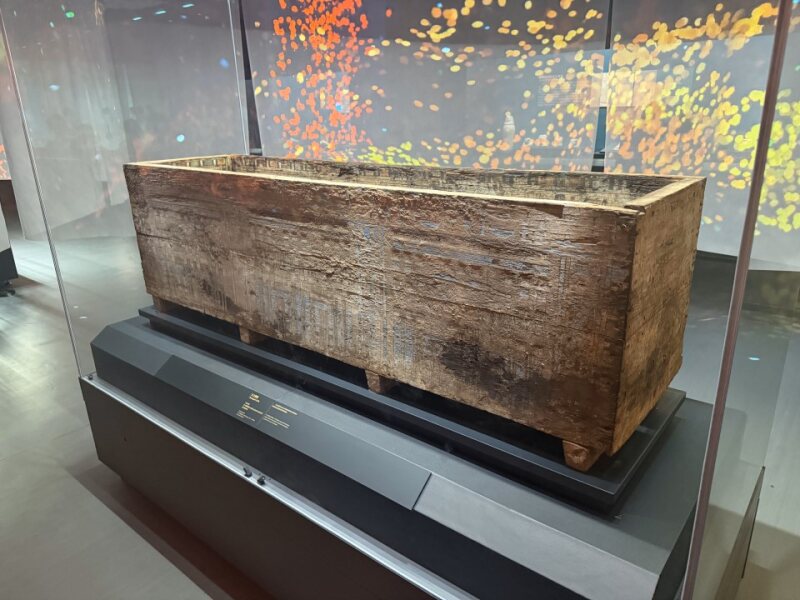 新王国木棺 18th Dynasty painted wooden coffin from Beni Hassan
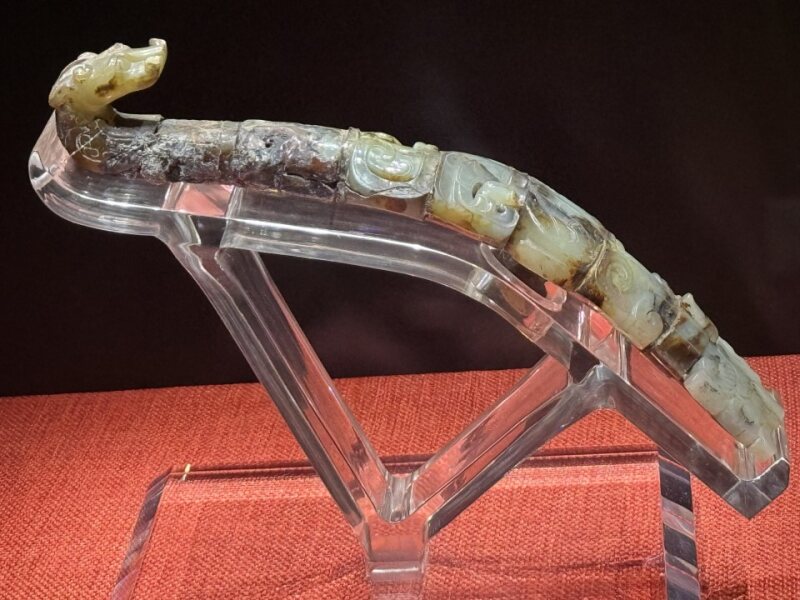 南越王博物馆玉龙饰 Jade dragon ornament from the Nanyue King tomb
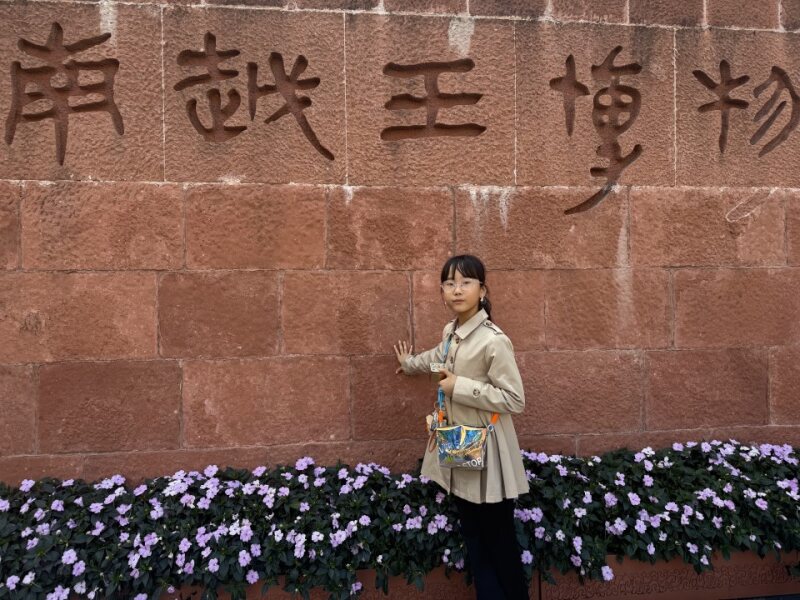 昭昭在南越王博物馆正门 Zhaozhao at the museum red sandstone entrance
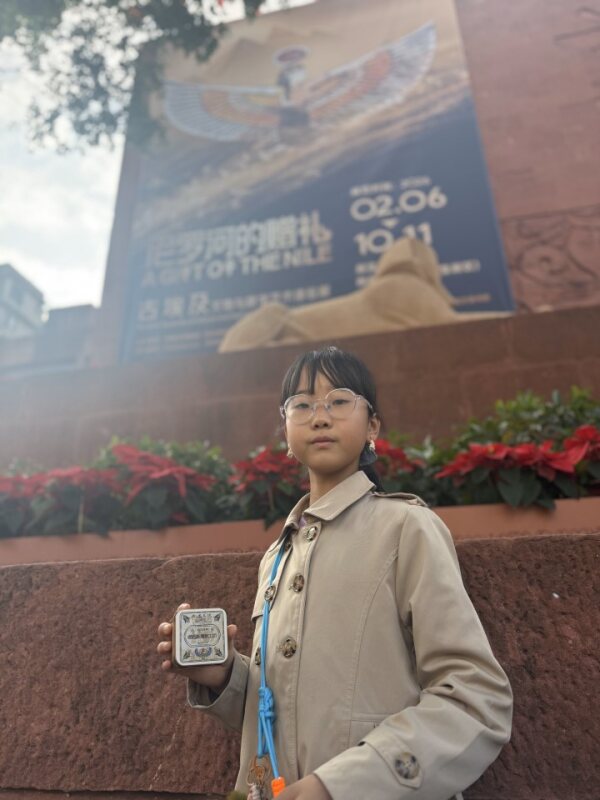 展览海报前 At the Gift of the Nile exhibit poster with souvenir tin
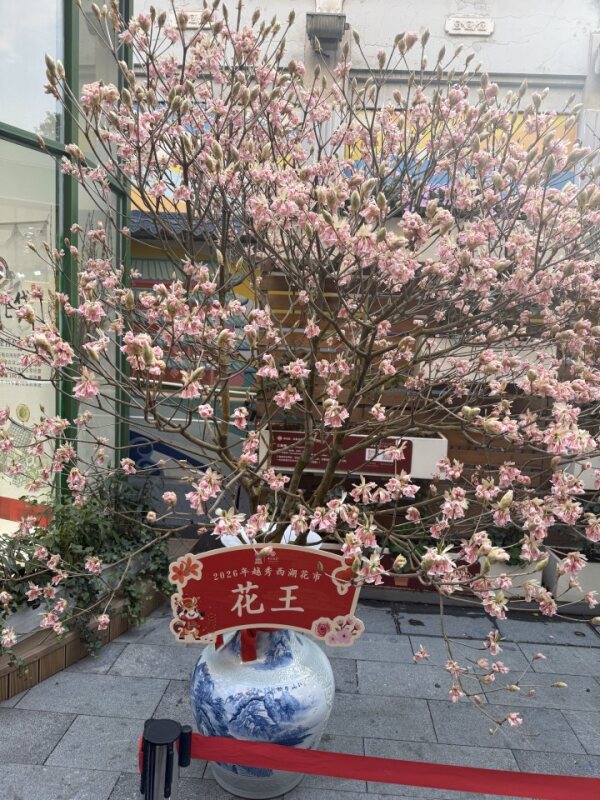 北京路花市花王 Prize-winning Flower King magnolia at Beijing Road flower market
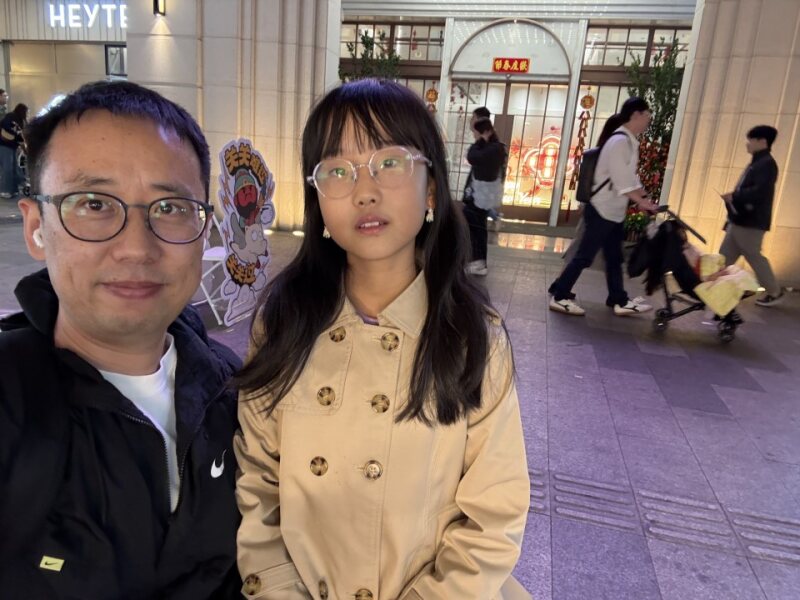 北京路步行街父女自拍 Father-daughter selfie on Beijing Road with HEYTEA
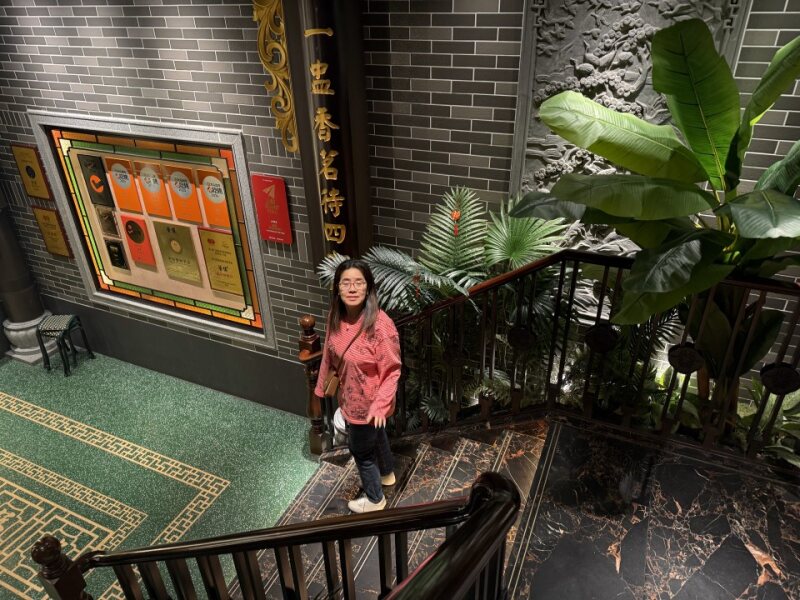 蘩花餐馆 Mom at the ornate staircase of Fanhua restaurant